
NYU Finance Professor Warns Debt-Fueled AI Boom Threatens Crash Worse Than Dot-Com
How debt-financed infrastructure and unsustainable spending make a potential AI crash far more dangerous than the dot-com bubble.
June 20, 2026
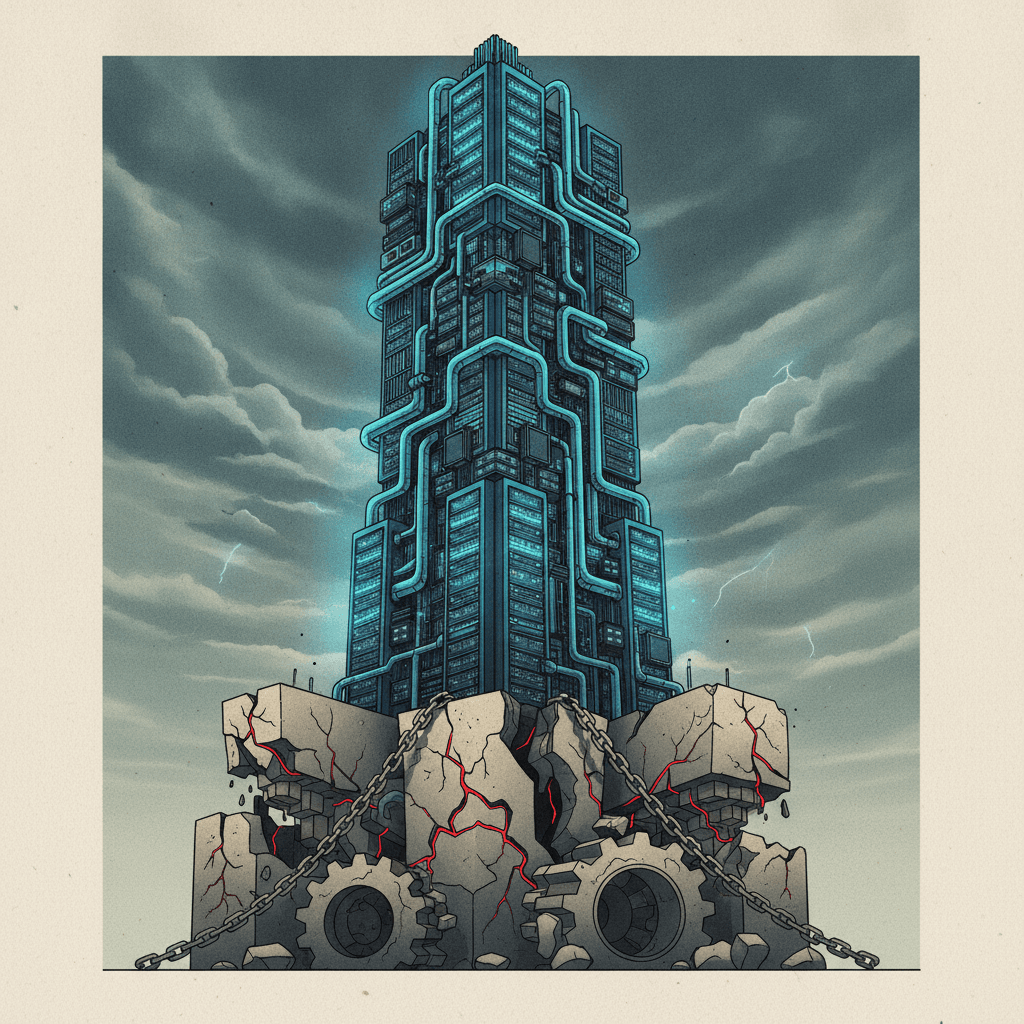
The global financial landscape is increasingly gripped by the promise of artificial intelligence, but a prominent voice in corporate finance is urging a profound reassessment of the risks involved. Aswath Damodaran, a renowned professor of finance at New York University's Stern School of Business widely referred to as the "Dean of Valuation," has issued a stark warning that a potential correction in the artificial intelligence sector could trigger an economic crash far more severe and painful than the bursting of the dot-com bubble at the turn of the millennium[1][2]. Speaking on the Excess Returns podcast, Damodaran detailed how the fundamental characteristics of the current artificial intelligence boom diverge from previous technological cycles, creating systemic vulnerabilities that could ripple well beyond the technology sector[3][4]. While the stock market continues to reward companies leading the artificial intelligence charge, Damodaran cautions that the structural foundations of this growth are built on massive, debt-financed capital expenditures[1][5]. If the anticipated commercial demand fails to materialize, the ensuing fallout will not be confined to stock market losses, but could instead trigger a broader socioeconomic crisis[1][3].
The primary distinction between the dot-com era of the late 1990s and today's artificial intelligence surge lies in the physical and capital intensity of the current cycle[5][6]. During the internet boom, companies largely focused on software development, digital platforms, and online services that required minimal physical infrastructure or heavy capital expenditure[5]. When the dot-com bubble eventually burst, technology stocks suffered catastrophic declines, with many high-flying start-ups seeing their valuations drop by ninety percent or more before collapsing entirely[5][3]. However, because these enterprises were primarily asset-light and almost exclusively funded by equity capital, the damage of the crash was largely restricted to the shareholders who had willingly assumed the risk[5][3]. In stark contrast, the artificial intelligence revolution is driving the largest infrastructure buildout in modern business history, comparable in scale to the construction of the railroads or the rise of the automobile industry a century ago[5][7]. To train and run complex large language models, the technology sector is currently spending hundreds of billions of dollars annually on advanced graphics processors, massive data centers, dedicated water cooling systems, and specialized energy grids[5][8]. This heavy reliance on physical assets means that a market correction would leave behind a massive overhang of highly specialized, depreciating infrastructure that cannot easily be repurposed for other industries[8][9].
What elevates this massive infrastructure spend into a systemic threat is the dangerous shift in how these projects are being financed[1][5]. While major tech giants hold significant cash reserves, a substantial portion of the broader artificial intelligence infrastructure ecosystem is being funded through leverage rather than equity, with much of the debt originating from the private capital markets rather than traditional, regulated banking institutions[3]. Damodaran emphasizes that when a technological boom is equity-funded, a crash simply wipes out paper wealth, leaving society relatively unaffected by defaults[3]. However, when an infrastructure boom of this scale is built on debt, any significant reduction in growth or revenue can trigger a wave of corporate distress and default[1][3]. If artificial intelligence startups and infrastructure providers cannot generate the cash flows required to service their mounting liabilities, the resulting defaults will directly impact private lenders, credit markets, and institutional investors[3]. Although Damodaran stops short of predicting an exact rerun of the subprime mortgage collapse, he notes that previous financial crises stand as stark warnings of what happens when lenders overreach, underprice risk, and fund unsustainable growth with debt, resulting in severe pain that inevitably spills over into the broader real economy[3].
Investors are currently highly susceptible to what Damodaran describes as the "big market delusion," a recurring market phenomenon where the undeniable potential of a massive new market blinds market participants to the actual economics of the individual businesses operating within it[10][4]. In a classic big market delusion, investors assume that because a technology is revolutionary and the total addressable market is vast, nearly every participant will emerge as a highly profitable winner[4]. In reality, the unit economics of many current artificial intelligence services remain deeply troubled, characterized by immense running costs, high energy consumption, and rapid depreciation of hardware[8][4]. When rapid revenue growth is accompanied by massive, ongoing reinvestment requirements and weak gross margins, that growth can actually become value-destructive rather than value-creative[11][4]. Furthermore, the intense competition among technology giants to build duplicate infrastructure is likely to lead to an oversupply of computing power, driving down prices and severely compressing profit margins across the entire value chain[10][12]. If the collective revenue generated by artificial intelligence applications fails to reach the trillions of dollars needed to justify the current scale of capital expenditures, the financial math underpinning the industry will inevitably break down[10][8].
Beyond the immediate financial mechanics of a market correction, Damodaran points to a deeper, more unsettling structural issue regarding the ultimate goal of the artificial intelligence business model[13]. Historically, major technological disruptions—from the steam engine to the personal computer—have functioned as tools that enhanced human productivity, temporarily displacing certain roles but ultimately creating entirely new industries and employment opportunities[13][14]. The primary business pitch of generative artificial intelligence, however, is the direct and complete replacement of human cognitive labor, rather than merely assisting it[13][14]. This represents a fundamental shift in the relationship between technology and employment, with highly uncertain and potentially disruptive consequences for society at large[13]. Even in a scenario where artificial intelligence succeeds technically and economically, the widespread elimination of entire job categories could lead to unprecedented social friction, wealth concentration, and a severe mismatch in the labor market[13][14]. The societal cost of dealing with both the economic dislocation of a displaced workforce and the financial burden of a debt-fueled corporate crash represents a double-edged threat that makes the current technology cycle uniquely hazardous[13][3].
In conclusion, the warning delivered by the Dean of Valuation serves as a crucial reality check for an investment community currently intoxicated by the narrative of an artificial intelligence-driven future[2][3]. The technological capabilities of artificial intelligence are undoubtedly impressive, but the laws of finance dictate that long-term value must ultimately be anchored in cash flows, sustainable margins, and sensible capital structures[12][4]. By highlighting the fundamental differences between the asset-light dot-com bubble and the debt-laden, infrastructure-heavy artificial intelligence buildout, Damodaran provides a vital framework for understanding the systemic risks at play[1][5]. As the corporate spending spree continues, both market participants and regulatory authorities must remain vigilant of the hidden leverage funding this expansion[3]. Navigating the road ahead will require looking past the hype of infinite technological growth and confronting the hard mathematical realities of debt, depreciation, and the profound societal transformations that the automation of human labor will inevitably bring[13][3].
Sources
[2]
[3]
[4]
[6]
[7]
[8]
[10]
[11]
[12]
[13]
[14]