
AWS launches new services to secure and power autonomous enterprise AI agents
New AWS Context and Continuum services bridge the critical data and security gaps preventing enterprises from scaling autonomous AI.
June 21, 2026
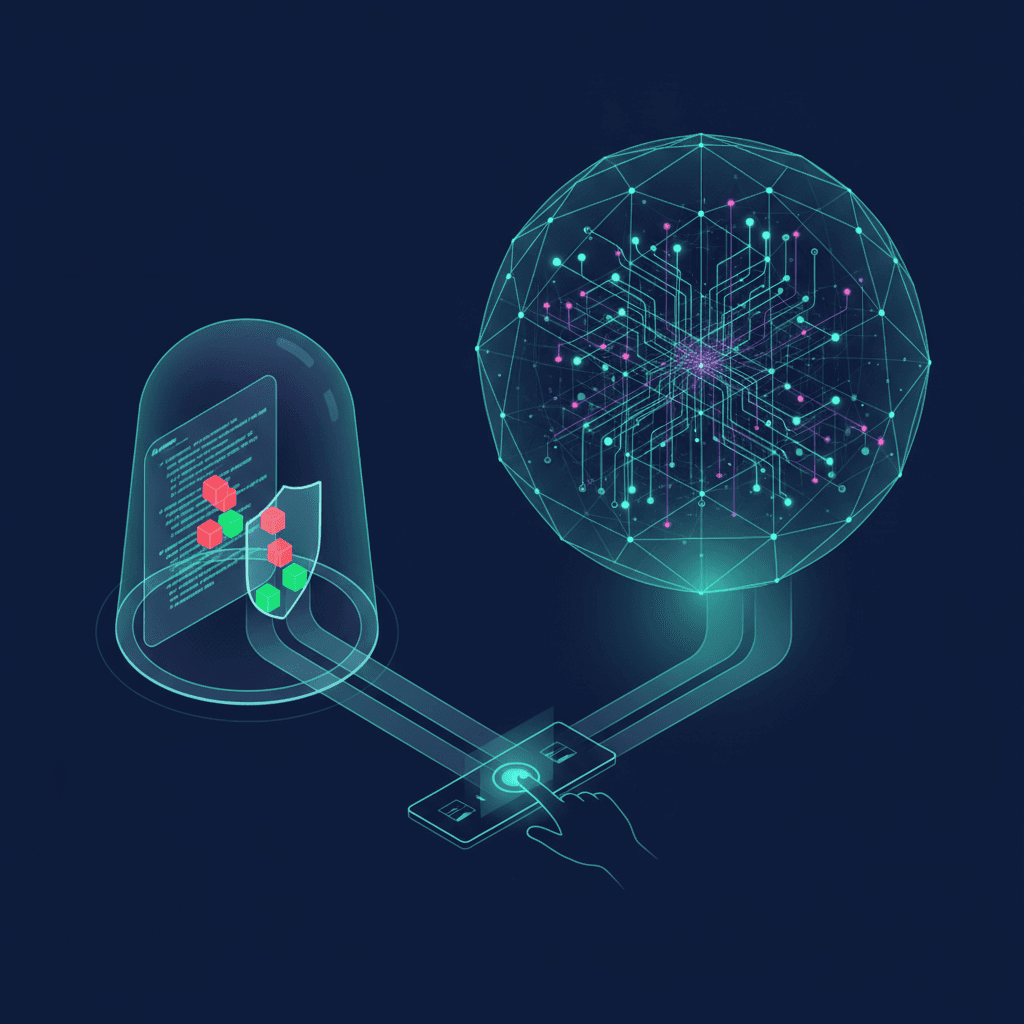
As enterprises rapidly shift from experimenting with artificial intelligence to deploying autonomous agents to manage complex workflows, a double-sided bottleneck has emerged. Artificial intelligence agents can write code and automate tasks at unprecedented speeds, yet they often lack the deep institutional context required to make correct decisions and frequently introduce or fail to detect critical software vulnerabilities. To address these limitations, Amazon Web Services has launched two new cloud services, AWS Context and AWS Continuum, designed to patch the critical gaps in business intelligence and cybersecurity that prevent companies from deploying autonomous agents in production. Announced at the AWS Summit in New York City, these tools represent a major strategic effort by the cloud giant to build the foundational infrastructure necessary for safe, trusted, and context-aware enterprise automation[1][2][3].
The transition from pilot programs to full-scale enterprise deployment of AI agents has been historically slow, with studies indicating that a vast majority of AI initiatives struggle to cross the finish line into production[4]. The primary hurdles are not the underlying capabilities of foundational models, but rather issues of governance, data organization, and trust[5][6]. Traditional retrieval-augmented generation pipelines, which are often used to feed data to language models, are frequently built in silos across different business departments[4]. This fragmentation leaves AI agents without a unified understanding of corporate rules, operational priorities, and relationship networks, leading to frequent hallucinations or incorrect outputs[6][4]. At the same time, the sheer volume of code being generated by AI developer tools has overwhelmed security teams, producing a mounting backlog of potential software vulnerabilities that traditional manual triage can no longer handle[7][8].
To solve the context deficit, AWS introduced AWS Context, a new service designed to provide a shared, governed layer of business intelligence for AI applications[9][4]. The service automatically maps the relationships across an organization's existing data lakes, warehouses, databases, and stream sources, assembling them into a unified knowledge graph[9]. This central context layer is then made accessible to AI agents at runtime, giving them instant access to validated data relationships, business rules, and domain-specific knowledge[9]. AWS executives have noted that an agent is only as intelligent as the context it is allowed to reason over[9]. By replacing fragmented data pipelines with a centralized, governed organizational knowledge graph, AWS Context ensures that agents do not have to guess or make up details when executing tasks[9][6][4]. The technology expands on the knowledge graph systems already used to power Amazon Quick, which processes millions of daily metadata requests, successfully turning what was once localized context into a shared resource for all enterprise agents[9].
While AWS Context addresses the intellectual foundation of AI agents, AWS Continuum is designed to tackle the escalating security threats of the agentic era[1][3]. The cybersecurity landscape has transformed rapidly due to the availability of advanced AI frontier models, such as Anthropic's Claude Mythos, which can find code vulnerabilities and map attack paths at machine speed[7][10]. Traditional security operating models, which rely on collecting telemetry, storing it, and building dashboards to watch for errors, are increasingly inadequate for keeping pace with this rate of code generation and exploitation[7]. AWS Continuum addresses this imbalance by providing active, outcome-driven security that manages the complete lifecycle of a software vulnerability[7][6]. Operating in gated preview, the platform leverages multiple model-agnostic frontier systems to discover, prioritize, validate, and remediate code risks at a pace that matches the speed of AI development[7][8].
The operational workflow of AWS Continuum is structured around four continuous phases, moving security teams away from manual backlog review to strategic oversight[8][10]. In the first phase, discovery, the system ingests an organization's existing vulnerability backlog and conducts its own comprehensive security scans across the environment[7][10][11]. Next, in the prioritization phase, Continuum evaluates every potential vulnerability by analyzing the structured and unstructured business context of the enterprise, identifying whether a component is actually deployed, reachable, or critical to operations[7][10][11]. During the third phase, validation, the system constructs working exploit examples in a sandboxed, isolated environment, eliminating false positives and presenting developers with reproducible evidence of actual security threats[8][10][11]. Finally, in the mitigation and remediation phase, Continuum reviews the code structure and surrounding infrastructure to recommend and apply precise fixes, ranging from security policy updates and network adjustments to direct code patches[8][10][11].
To manage the inherent risks of giving an autonomous system the power to modify production environments, AWS designed Continuum to operate with strict human-in-the-loop guardrails[12][11]. The service initially starts in a supervised learn mode, where it generates recommendations and clearly outlines the reasoning behind every suggested action[12][11]. As developers and security administrators gain confidence in the system's accuracy across specific risk categories, they can graduate the service into an enforce mode, allowing for automated, policy-based remediations[11]. This step-by-step trust model reflects a broader push within AWS to balance the efficiency of autonomous agents with the absolute necessity of human control[12]. The capabilities of AWS Continuum also integrate directly into developer workflows, supporting Git platforms like GitHub, GitLab, and Bitbucket, as well as document repositories like Confluence[13]. Through open Model Context Protocol integrations, developers can generate threat models, perform code reviews, and execute sandboxed remediations directly inside their preferred integrated development environments or command-line interfaces[13][10].
The launch of these services coincides with a series of broader updates to the AWS agentic portfolio, highlighting the cloud provider’s comprehensive approach to developer operations[14]. AWS has introduced verification capabilities to its DevOps Agent, allowing it to autonomously test AI-generated code in production-like environments to catch system failures before deployment[3][5]. The company also announced improvements to its coding assistant, Kiro, introducing a native iOS application that allows developers to monitor autonomous coding sessions and approve changes from mobile devices, alongside the AgentCore Harness for simplified agent runtime configurations[12][5][15][14]. Collectively, these tools highlight a significant shift in the competitive landscape of enterprise cloud computing. Rather than focusing solely on raw model parameters or processing speed, cloud hyperscalers are increasingly competing on context engineering, enterprise security integrations, and development pipelines that can de-risk AI technology for conservative corporate environments[5][6].
Ultimately, the successful adoption of agentic AI within the enterprise relies on resolving the underlying technical pipelines, or the plumbing, that connects models to real-world business environments[16]. By launching AWS Context to govern organizational data and AWS Continuum to secure code at machine speed, AWS is addressing the exact trust and context limitations that have previously kept highly capable AI agents confined to prototype environments[1][3]. As organizations begin to deploy these managed guardrails, the potential for autonomous systems to safely execute complex, multi-step business processes is likely to expand, transforming how modern enterprises develop software, manage data, and secure their digital infrastructure[2][17].
Sources
[2]
[7]
[8]
[9]
[10]
[12]
[13]
[14]
[15]
[16]
[17]